
Export Buyer Guide
Fire Hose Coupling Standards: Storz, John Morris, Nakajima and Machino
In short: a hose coupling is a compatibility decision before it is a product decision. Two couplings of the same nominal size, made to different national patterns, will not connect — and on site that failure is discovered at the worst possible moment. This guide explains the coupling families you will meet in international tender documents, how each one locks, which markets use which, and how to specify a hose line that actually fits the hydrant, the pump and the nozzle at the other end.
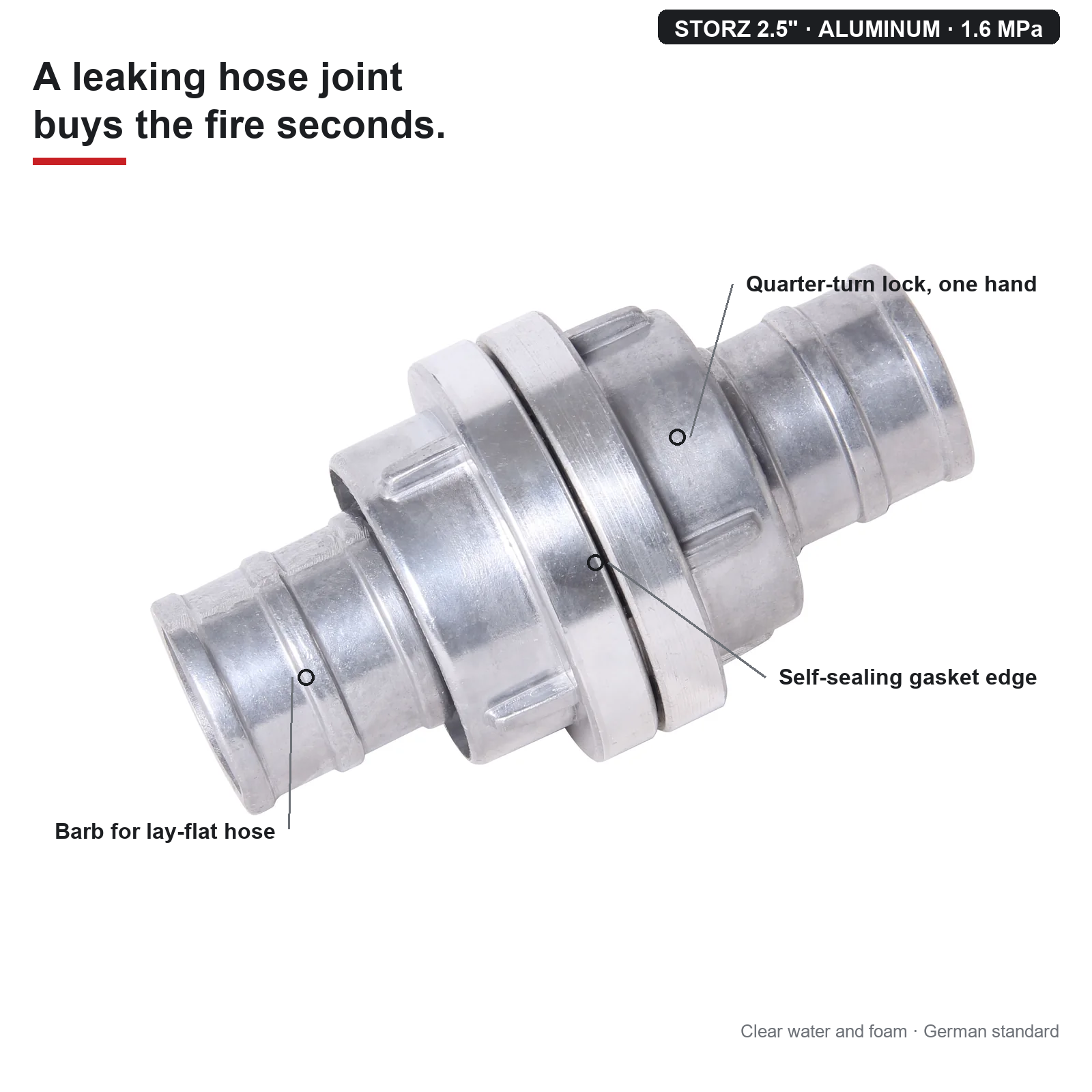
Aluminum Storz Fire Coupling 2.5"
German standard, quarter-turn, 1.6 MPa, barbed
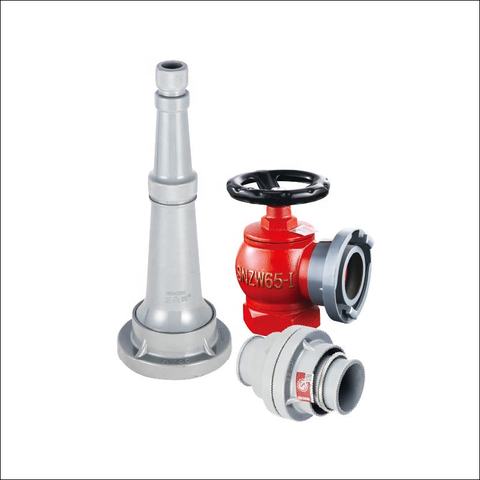
HS Hydrant Hose Coupling Adapter
DN50/DN65, anodized aluminum, 1.6 MPa
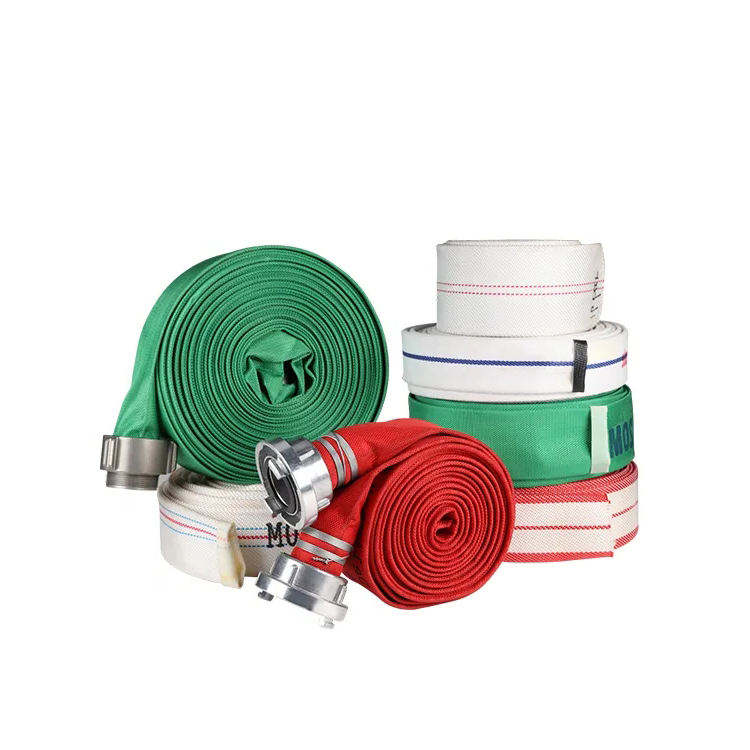
PVC Rubber Lining Layflat Hose 8-65
65 mm standard coupling size, 19-400 mm bore
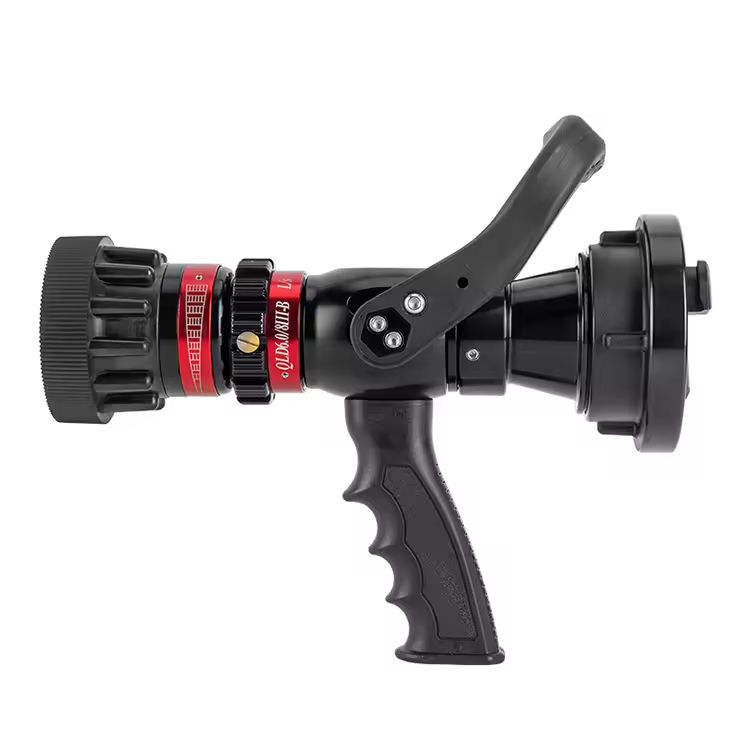
Adjustable Pistol Grip Nozzle
1.5"/2"/2.5" inlet, 150-500 LPM, fog to stream
1. Why Coupling Standards Decide Compatibility
Fire hose is a commodity. Couplings are not. A length of 65 mm layflat hose is broadly the same product whether it was woven in Asia or Europe, but the coupling pressed onto its end belongs to a national tradition of firefighting practice, and those traditions do not interoperate. Each pattern was standardized by a country's fire service for the appliances it had at the time, and the standards were never harmonized.
The result is a compatibility matrix that a procurement engineer has to navigate by hand. Nominal size is the trap: 2.5 in, 65 mm, DN65 and "C size" all describe roughly the same bore, and every one of them can be executed as a Storz coupling, a John Morris coupling, a Nakajima claw coupling, a Machino thread or an NST thread. None of these will mate with any of the others. The size tells you the flow capacity; the pattern tells you whether the line can be connected at all.
For an export project, that means three parties have to agree before the purchase order is released: the consultant who wrote the specification, the fire department that will respond to the building, and the maintenance team that will test the system. If the specification says "2.5 inch instantaneous" and the local brigade carries Storz, you will deliver equipment that is technically compliant and operationally useless. Ask for a photograph or a sample of the hydrant outlet the brigade uses — not a description.
Two interface components decide most of these questions: the hydrant outlet and the hose cabinet valve. The SN65 indoor fire hydrant head is a DN65 (2.5 in) wall-mounted valve rated 1.6 MPa (232 PSI) and tested to 2.4 MPa, available with grooved or flanged connections and an anodized aluminum or brass coupling interface — so the coupling pattern can be fixed at order time. Wider hydrant practice, including underground and pillar types, is covered in the fire hydrant valve standards guide.
2. Storz: Symmetric and Quarter-Turn
Storz is the most widely exported coupling family, and its defining feature is that it has no male and no female. The two halves are identical: each carries internal lugs or hooks around its rim, and pushing the halves together and turning a quarter turn engages them. A gasket seated in the coupling face does the sealing, so the joint does not depend on thread torque. The result is a connection that one person can make in a second, in the dark, with gloves on.
Because there is no direction, hoses can be joined in any order and a damaged end can be replaced with the same part as the other end — an inventory advantage on a large site. The absence of a thread also means there is nothing to cross-thread, which is why Storz survives hard use in marine and industrial service better than threaded patterns. The trade-off is that the lugs are exposed and can be deformed by impact, and a deformed lug will not seat; the coupling also relies entirely on its gasket, so a missing or hardened gasket leaks immediately.
Size steps are nominal and follow the hose: DN50, DN65, DN80, DN100 and DN150 (2 in to 6 in), with larger sizes carrying more lugs. Each size only mates with the same size, so a DN65 hose cannot be connected to a DN80 outlet without a reducing coupling. Our 2.5 in aluminum Storz coupling follows the German standard in aluminum with optional brass or chrome plating, rated 1.6 MPa for clear water and foam mixture, barbed for layflat hose and supplied factory-fitted or loose.
One point worth clearing up in the submittal: Storz is the hose-to-hose and hose-to-appliance interface, not the hydrant outlet thread. A hydrant with a John Morris or NST outlet needs a Storz adapter on that outlet — the role of the HS series adapter described below.
3. Threaded Patterns Compared
Threaded and claw patterns are where most project mismatches occur, because the names travel in tender documents without their dimensions. The four you will meet most often outside North America are John Morris, Nakajima, Machino and the British instantaneous type; NST is the North American equivalent and appears in most US-influenced specifications.
John Morris is a British-origin threaded pattern with a male and a female half, sealed by a washer in the female swivel. The thread is coarse and rounded so it can be made up quickly by hand, and the coupling is standard across the UK and much of the Middle East and Southeast Asia. It is robust and repairable, but it is slower than a quarter-turn coupling and the thread must be kept clean.
Nakajima is a Japanese instantaneous pattern: two external levers on one half hook over a groove on the other, and squeezing the levers locks the joint. It is fast, needs no rotation, and is the normal hose coupling in Japan. Machino is the Japanese threaded pattern, used where a screw connection is wanted — typically on hydrant outlets and appliances rather than on the hose itself. The two coexist in Japanese practice, which is why Japanese-market specifications usually name both.
The instantaneous type (often written "Inst") is the British claw coupling: two levers grab a groove, similar in principle to Nakajima but built to a different standard and not interchangeable with it. Together with Storz, these are the patterns most often confused at the "2.5 inch" level, and telling them apart requires the standard name, not the size. The table below is a starting reference for the submittal review.
| Pattern | Locking method | Typical market |
|---|---|---|
| Storz (symmetric) | Quarter turn, internal lugs, face gasket; sexless halves | Germany and Central Europe, Middle East, marine and industrial export |
| John Morris | Coarse male/female thread with washer seal | UK, Middle East, Singapore, Malaysia, Hong Kong |
| Nakajima | Twin lever claw over a groove, instantaneous | Japan, and Japanese-specified projects in Asia |
| Machino | Threaded male/female, screw connection | Japan, Korea, Taiwan |
| Instantaneous (Inst) | Twin lever claw, British claw pattern | UK, Commonwealth markets, institutional buildings |
| NST / NH (ANSI) | Coarse V-thread, male/female, washer seal | United States, Canada, US-specified projects |
4. Matching Couplings to Hydrants and Nozzles
A hose line has at least three joints: hydrant or cabinet valve to hose, hose to hose, and hose to nozzle. Each can be a different pattern, and each one is a place where the line fails. The practical approach is to fix the pattern at the hydrant, because that is the interface you cannot change — it is set by the local fire department — and then carry that pattern through the hose and into the nozzle.
Where the hydrant outlet and the hose differ, an adapter bridges them. The HS series hydrant hose coupling adapter is machined from T6 hard-anodized aluminum in DN50 and DN65 (2 in to 2.5 in), with a self-sealing EPDM internal thread seal and a 1.6 MPa (232 PSI) rating, so a Storz or other quick-connect hose can be taken onto a threaded hydrant outlet without a second joint. Keep the adapter count low: every additional joint is another gasket to lose.
The hose end is the second decision. A PVC rubber-lined layflat hose in the Model 8-65 (65 mm) configuration takes a standard 65 mm coupling, and the same hose is available from 19 mm to 400 mm bore for other duties, with standard aluminum or brass couplings and the thread system matched to the market on request. Confirm whether the coupling is supplied factory-fitted or loose: factory fitting gives a tested assembly, while loose couplings let the contractor match an existing inventory — both are legitimate, but they are different orders.
At the far end, the nozzle inlet pattern has to match the hose coupling. The adjustable pistol grip nozzle is available with 1.5 in, 2 in and 2.5 in inlets and delivers 150 to 500 LPM with patterns from straight stream to wide fog, so the 2.5 in version is the one that mates with a 65 mm line — directly, if the coupling is threaded, or through the matching adapter if the line is Storz. Settle the coupling pattern before the nozzle is ordered.
5. Common Project Mistakes
The same failures recur across projects, and all of them are avoidable at specification stage.
- Mixed standards in one building. A tender that specifies Storz hoses, John Morris hydrants and NST nozzles is buying three adapters per line. Audit the whole line — hydrant, hose, nozzle, and any pump connection — against one pattern.
- "2.5 inch" written without a pattern. The size is a bore, not a connection. Every coupling line in the schedule should name the standard, not just the diameter.
- Gasket loss and wrong gaskets. Gaskets fall out during handling and are rarely in the spares box. Specify spare gaskets in the order and state the material: EPDM for water and foam, and a material suited to any other medium.
- Rating taken from the hose alone. The coupling, hose and nozzle must be rated for the maximum pressure the system can produce, which on a boosted installation is the pump churn pressure. A hose assembly is only as strong as its weakest joint.
- Damaged threads on delivery. Exposed threads and claws are easily deformed in transit. Specify protective caps and inspect on receipt; a cross-threaded coupling on a fire line is a leak that cannot be fixed on site.
- Galvanic mismatch. Aluminum coupled to brass in coastal or marine air corrodes at the joint. Decide the material combination deliberately, not by availability.
- No approval sample. Where the fire department will operate the equipment, approve a physical sample before production.
6. Specification Checklist
- Name the pattern and the standard. Storz (state the national standard, for example German), John Morris, Nakajima, Machino, instantaneous or NST — plus the nominal size, for example DN65 / 2.5 in.
- State the joint configuration at each end. Barbed for layflat hose, male thread, female swivel or quick-connect, so both ends of every item are defined.
- Set the pressure rating and the test pressure. Working pressure plus the test pressure the assembly will see at commissioning; 1.6 MPa (232 PSI) is our standard aluminum coupling and hydrant valve rating.
- Specify material and finish. Anodized aluminum for weight, brass for corrosion resistance in marine service, chrome plating where wear resistance matters.
- State the gasket material and order spares. EPDM self-sealing for water and foam; add spare gaskets and caps to the order line, not to a separate requisition later.
- Define the hose. Bore, length, lining, coupling size and whether couplings are factory-fitted and pressure tested or supplied loose. Our fire hose buying guide covers the hose side of that decision.
- Include the accessories. Spanner or wrench, blank caps with retaining chains, and any adapter needed at the hydrant boundary.
- Request documents and a sample. Material certificates, pressure test records for hose assemblies and an approval sample where the fire department will operate the equipment — the same document discipline as any fastening or valve order.
If the equipment is being bought as part of a wider package, the B2B valve sourcing checklist sets out the inspection and documentation points that apply to couplings, valves and cabinets alike.
Frequently Asked Questions
Is a 2.5 inch coupling the same everywhere? +
No, and this is the single most expensive misunderstanding in hose procurement. The size describes the nominal bore of the hose or the coupling, not the way it locks. A 2.5 in (65 mm) Storz coupling, a 2.5 in John Morris coupling and a 2.5 in NST coupling all fit 65 mm hose and none of them will connect to each other without an adapter.
Can I use adapters instead of matching the standard? +
Adapters are a legitimate solution for one or two interface points — a hydrant outlet that does not match the site hose, for example. They are a poor solution as a system-wide strategy, because every adapter is an extra joint, an extra gasket, an extra item to lose and an extra pressure loss. If your project will use many hoses, specify the couplings to the local standard and use adapters only at the boundary.
Why do couplings leak at the joint even when they are tight? +
Almost always the gasket. It may be missing, hardened, swollen by the wrong medium, or the wrong profile for that coupling type — Storz couplings seat on a gasket inside the coupling half, while threaded patterns seal on a washer in the female swivel. A thread that is tight but dry will still leak, and a damaged or missing gasket is the first thing to check on any wet joint.
What pressure rating should the couplings and hose carry? +
Rate the whole line, not just the pump. The coupling, the hose, the nozzle and the hydrant valve should all be rated for the maximum pressure the system can produce, which on a boosted installation is the pump churn pressure rather than the rated pressure. Our standard aluminum couplings and hydrant valves are rated 1.6 MPa (232 PSI); if your system is tested above that, say so at inquiry stage.
Aluminum or brass couplings for an export project? +
Aluminum is lighter and cheaper, which matters on long hose lays and in high-volume cabinets, and anodized aluminum is the usual choice for Storz and instantaneous types. Brass resists galvanic corrosion better in marine and coastal service and survives rougher handling at the threads. A mixed aluminum-to-brass joint in salt air is the combination to avoid, because the aluminum side corrodes first.
What should be in a coupling submittal? +
The pattern and standard by name, the nominal size, the material and finish, the working pressure, the gasket material, and the hose-tail or thread configuration at each end. Add a physical sample for approval on any project where the fire department will use the equipment, because a sample settles in one minute what a drawing description cannot.
Need Couplings Matched to Your Standard?
Send the coupling pattern, size, material and quantity, or a photo of the hydrant outlet you have to connect to — our engineers confirm the matching parts and quote within 12 hours.