
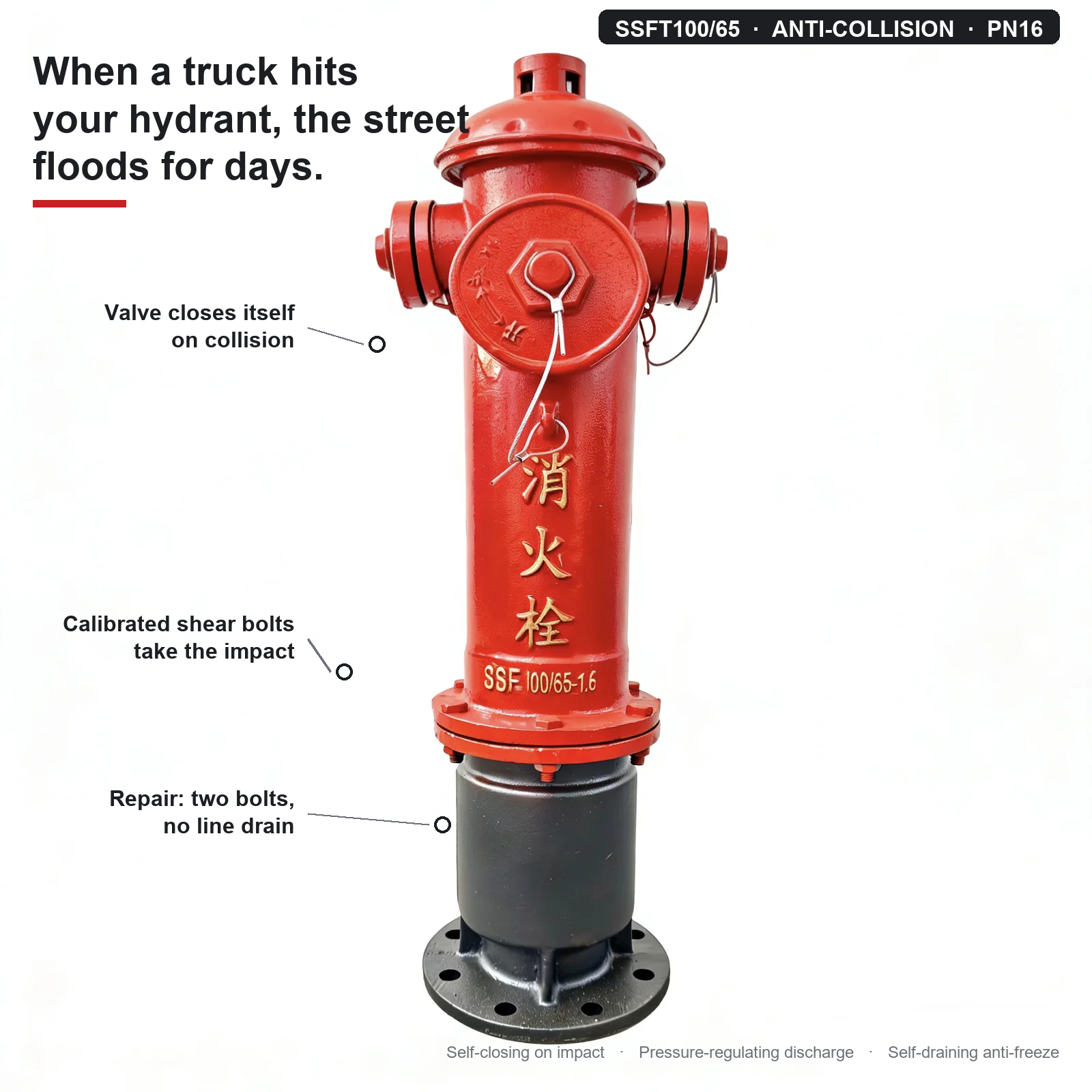
Self-Closing Anti-Collision Fire Hydrant (SSFT100/65) — Bolt-Shear Shutdown, Pressurized Repair
When a truck hits a standard fire hydrant, the street floods for days and the whole main has to go down for repairs. The SSFT100/65 is built for that exact moment.
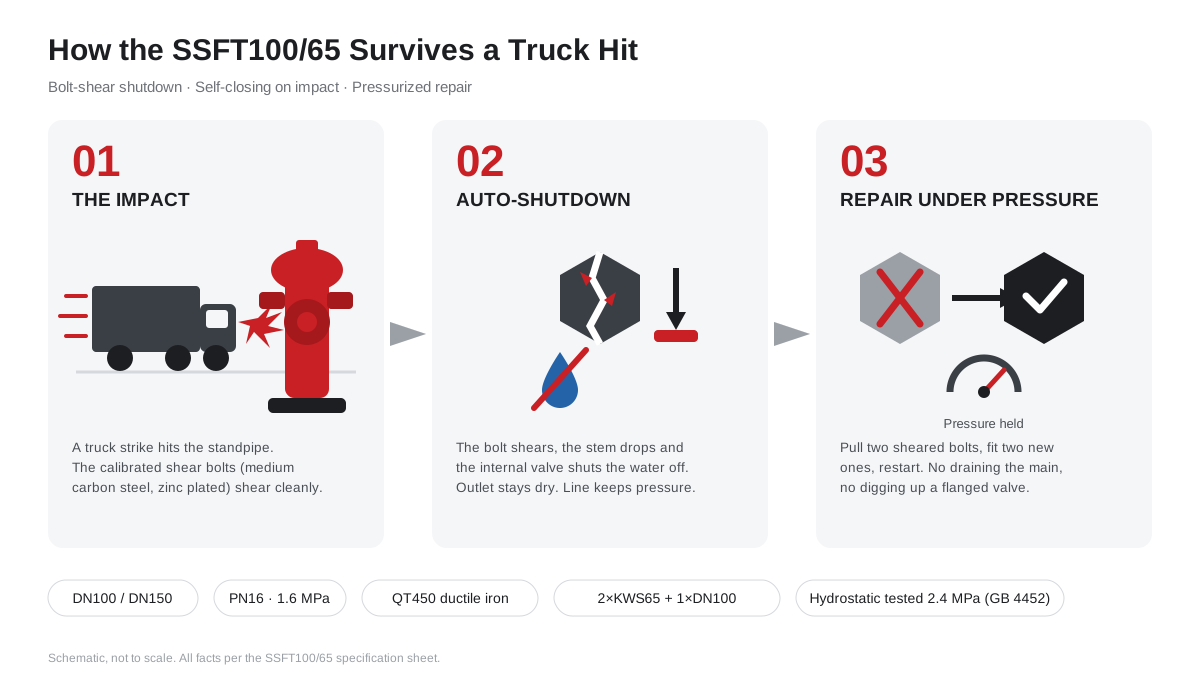
In a collision, two calibrated safety bolts shear cleanly and the internal valve shuts the water off immediately. The hydrant stands, the outlet stays dry, and your network keeps its pressure. When it is time to repair, the crew pulls the two sheared bolts and fits two new ones. No draining the line, no digging up a flanged valve.
A built-in pressure regulating device gives progressive, smooth discharge at the outlets, and the automatic self-draining system keeps it frost-safe in winter. Ductile iron QT450 body, DN100/DN150, PN16, 2×KWS65 plus one DN100 outlet, hydrostatically tested to 2.4 MPa per GB 4452.
Key Features
- Automatic sealing upon collision prevents severe water loss and flooding
- Built-in pressure regulating device allows progressive and smooth water discharge
- Equipped with automatic self-draining system to prevent freezing in winter
- Very low maintenance cost: simply replace safety bolts and restart
Technical Specifications
- Nominal Diameter
- DN100 / DN150
- Nominal Pressure
- 1.6 MPa
- Inlet Connection
- Flanged
- Outlets
- 2x 65mm (KWS65) + 1x 100mm (DN100)
- Body Material
- Ductile Iron QT450
Parts & Materials List
- Hydrant Body
- Ductile Iron QT450
- Lower Valve Seat
- Solid Brass Alloy / EPDM covered
- Shear Bolts
- Medium Carbon Steel Zinc Plated (Specialized Calibrated)
- Springs
- Stainless Steel 304
- Caps & Interfaces
- Anodized Aluminum Alloy / Brass
Applications
- Municipal fire protection networks
- Industrial and warehouse yards
- Indoor standpipe systems
- Cold-climate outdoor installations
Quality & Testing
Hydrostatic pressure testing (2.4 MPa typical) and flow testing per GB 4452 or applicable export standards.
Frequently Asked Questions
How does the SSFT100 shut off water after a vehicle collision?
What does the built-in pressure-regulating device do?
What outlet standards does the SSFT100 use?
How much maintenance does an anti-collision hydrant need after an impact?
Related Buying Guides
Fire Hydrant, Fire Hose & Valve Standards Explained
AWWA C502, NFPA 1961, EN 14384, ISO 5208 — what each standard means and how to verify compliance in Chinese factories.
Read Guide Buying GuideWanlian Fluid vs American AVK
Which fire hydrant & valve supplier fits your 2026 project? Scope, geography and standards compared side by side.
Read Guide Buying GuideHow to Choose a Fire Hydrant
Indoor vs outdoor, dry vs wet barrel, outlet standards and pressure ratings for municipal and industrial projects.
Read GuideRelated Products
 Hydrants & Pump Connections
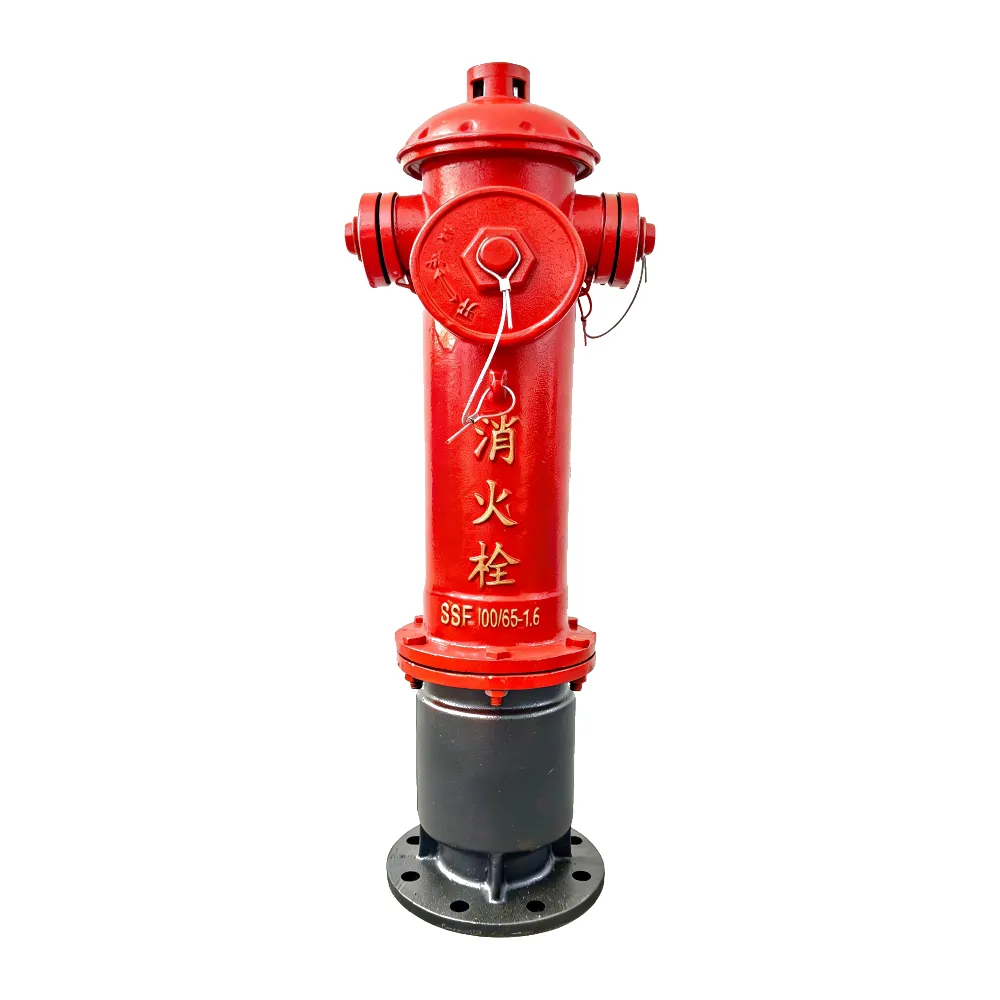
 Overground Antifreeze Fire Hydrant (SS100/65)
View Details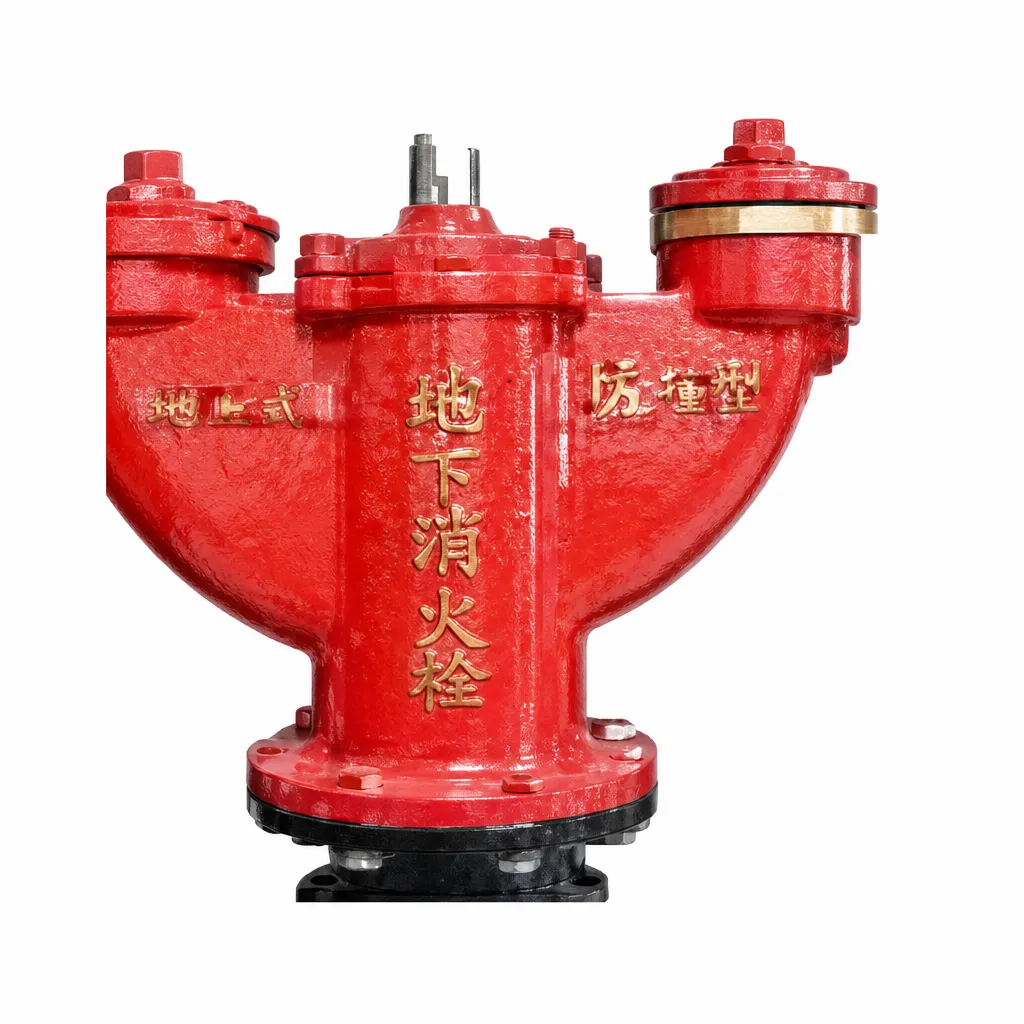 Hydrants & Pump Connections
 Underground Fire Hydrant (SA Series)
View Details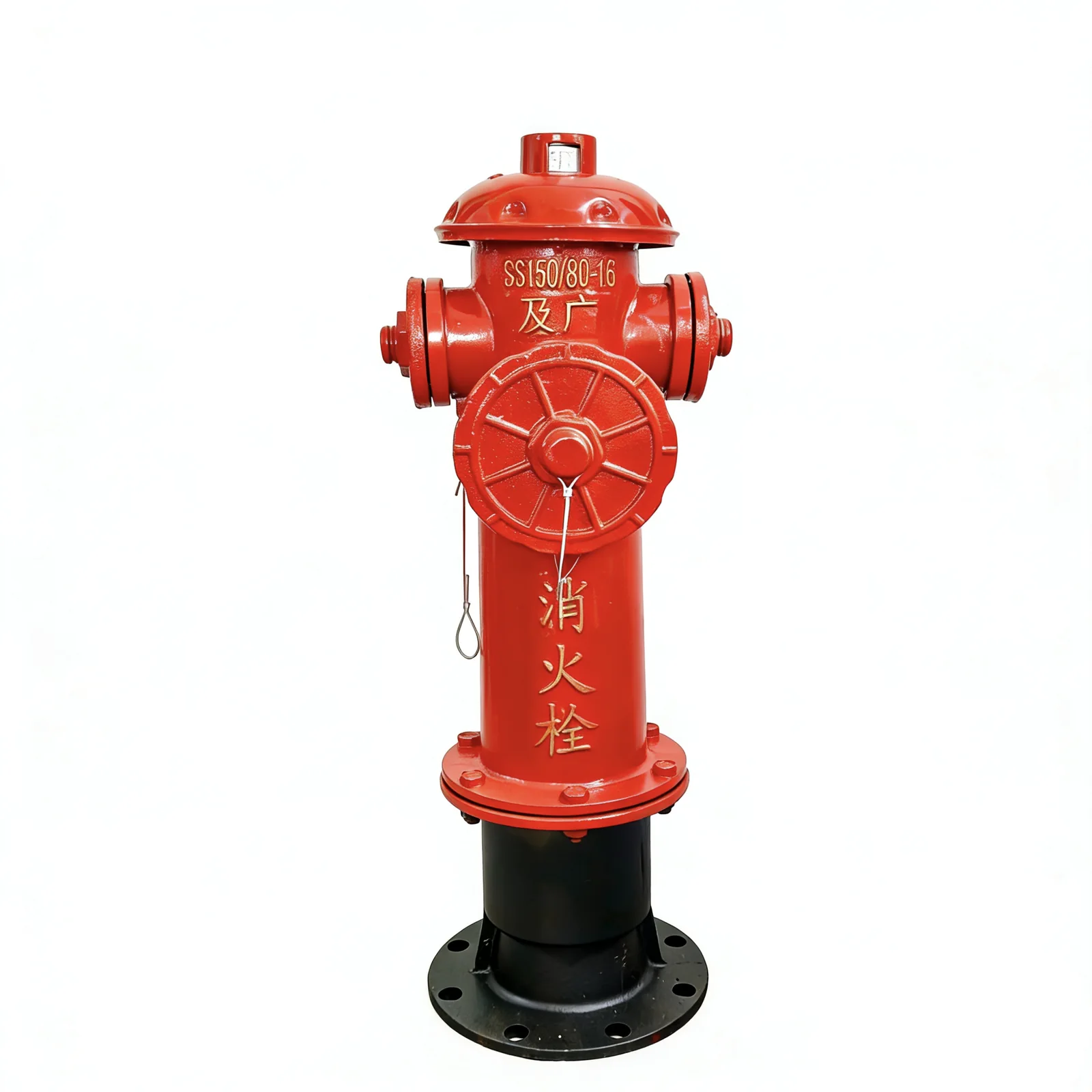 Hydrants & Pump Connections
 IoT Smart Ground Fire Hydrant (SS100/65-1.6ZN)
View Details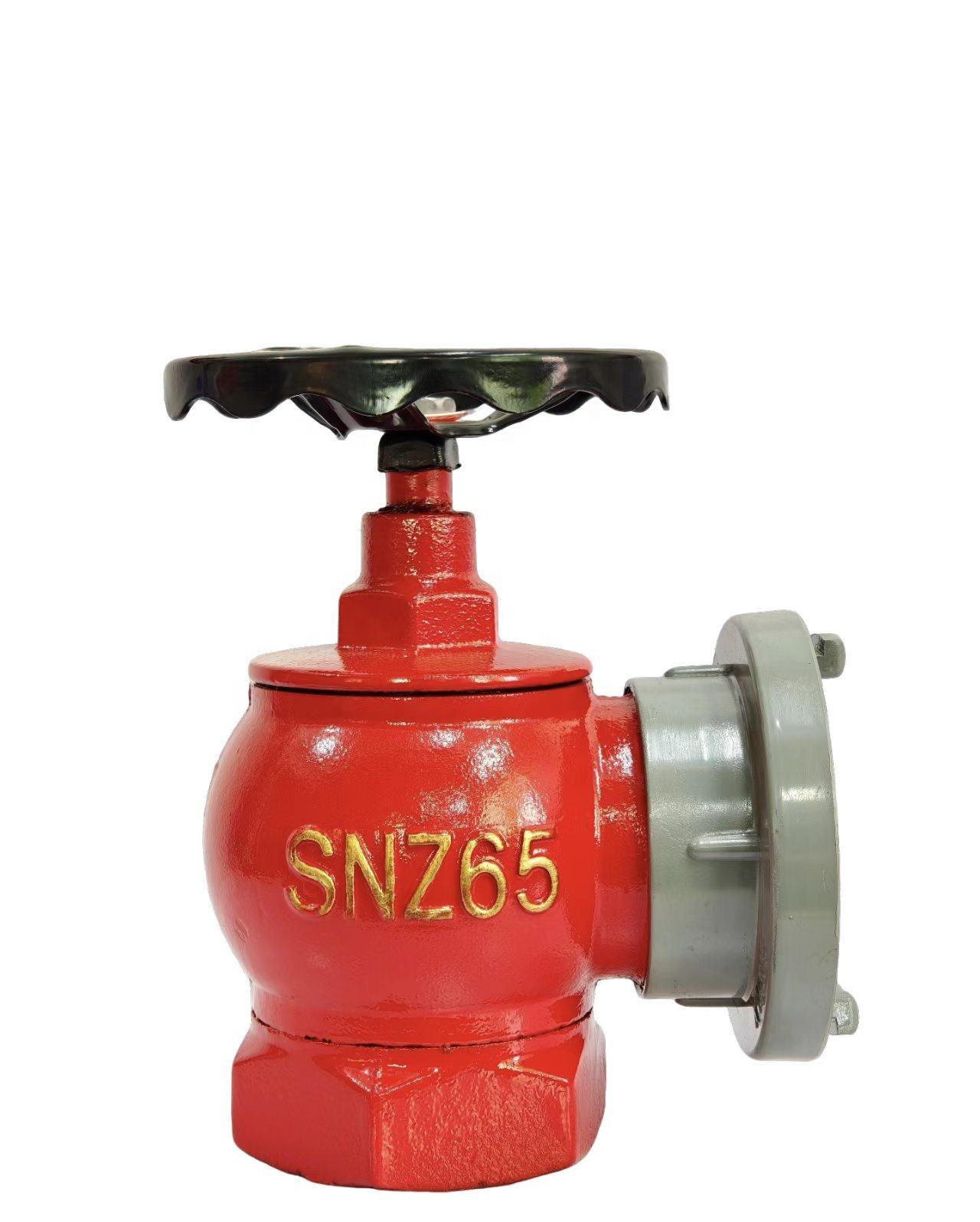 Hydrants & Pump Connections