
Sprinkler System Guide
ESFR Sprinkler Systems: K-Factor, Storage Height & Design Guide
In short: an ESFR system is specified when the building stores goods high and the owner does not want in-rack sprinklers. The sprinkler has to knock the fire down on its own, so it uses a large K-factor, a fast 74°C bulb and a high design pressure. This guide covers what ESFR does, how to pick the K-factor, and what the rest of the system must provide.
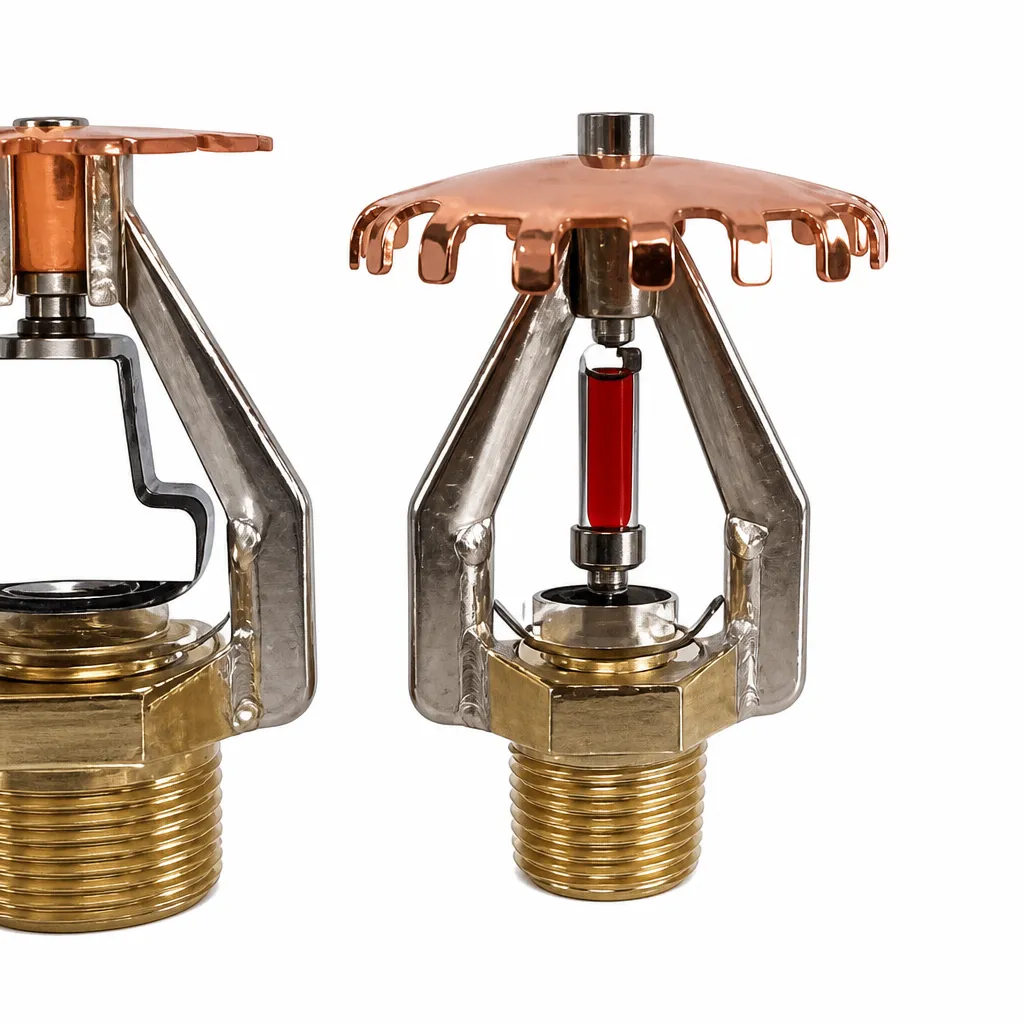
ESFR Early Suppression Sprinkler
K202 / K242 / K363, 74°C, pendent & upright
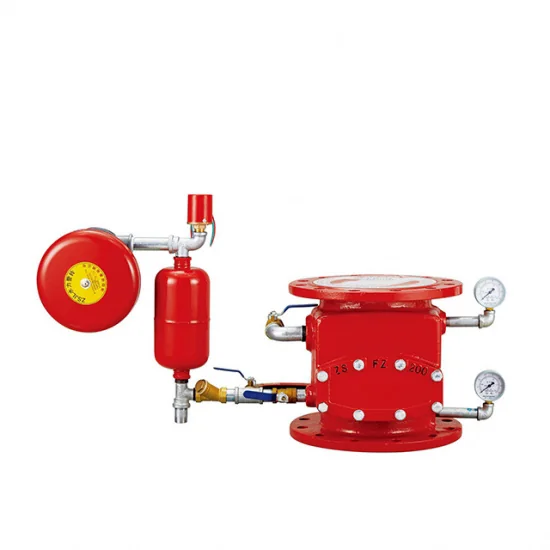
ZSFZ-150 Wet Alarm Check Valve
DN100-DN200, alarm port + retard chamber
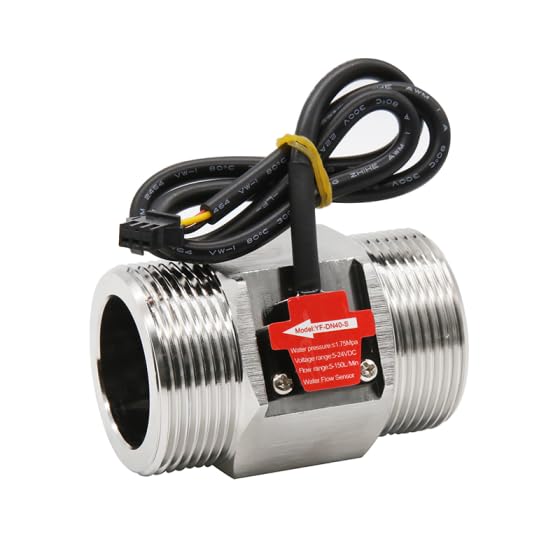
ZSJZ Vane Water Flow Indicator
DN50-DN200, 2-60 s adjustable delay
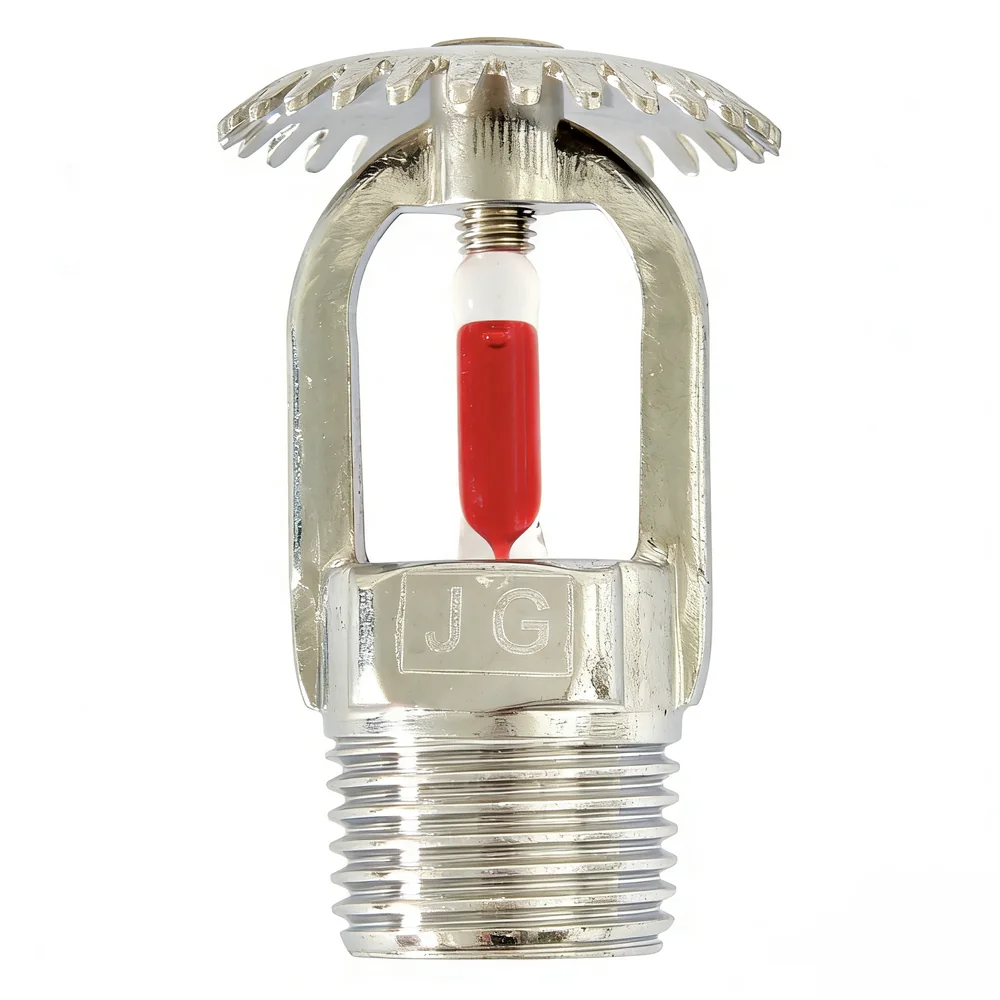
ZST Glass Bulb Sprinkler
Standard response control-mode heads
1. What an ESFR System Actually Does
Every sprinkler is designed against a fire scenario, and the scenario decides the hardware. A conventional control-mode sprinkler assumes the fire will grow until the fire service arrives and finishes the job; the sprinkler's task is to keep the fire from spreading and to stop the structure from collapsing. An ESFR sprinkler, by contrast, is asked to put the fire out — or at least to hold it at a size the building can survive — using only the water it can deliver from the ceiling.
That demand comes from the storage itself. In a warehouse with racking three or four tiers high, a fire that starts low in the rack is shielded from the ceiling by the goods above it. Water from the ceiling has to penetrate that obstruction, cool the flue space and wet the commodity before the fire has enough energy to jump aisles. Standard sprinklers, working at ordinary densities, usually cannot deliver enough water that fast — which is why conventional high-pile storage protection historically depended on in-rack sprinklers.
ESFR changes the economics of the building. It combines a very high discharge rate with a fast-response element, so the first heads to operate throw a heavy column of water onto the fire while it is still small. When the arrangement fits the standard, the rack sprinklers disappear from the drawing: fewer fittings, less pipe in the racking, no protection damage when a forklift clips a rack upright, and a much cheaper retrofit. See the ESFR sprinkler range for the models we manufacture.
2. ESFR vs Standard Sprinklers
The two families answer different questions, and mixing them up is the most common specification error we see. The table below is the short version a buyer can use in a meeting.
| Comparison | ESFR | Standard control-mode |
|---|---|---|
| Design intent | Suppress the fire with the ceiling heads alone | Control the fire until the fire service arrives |
| Response | Fast response, 74°C (165°F) bulb | Standard or quick response, 57-141°C range |
| K-factor | High: our range spans K202, K242 and K363 metric | Typically K80-K115 metric |
| Operating pressure | High; set by the design, often several bar at the head | Low; density-driven, usually under 1 bar at the head |
| Storage height | High-pile, with limits set by K-factor and pressure | Limited; often needs in-rack sprinklers above 3.7 m |
| Water demand | Few heads, very high flow per head | More heads, moderate flow per head |
| Best fit | Racked and palletized storage, cold storage, distribution centers | Offices, light hazard, low-pile manufacturing |
One practical consequence: an ESFR system is not a drop-in upgrade for an existing warehouse system. The pipe sizes, pump curve and water supply all have to be reviewed, because the same building that satisfied a control-mode design will rarely satisfy an ESFR one without changes to the supply.
3. K-Factor, Pressure and Storage Height
The K-factor is the sprinkler's discharge coefficient: flow varies with the square root of pressure, so a larger K delivers more water at the same pressure, or the same water at lower pressure. The relationship is the reason a 25 mm larger K-factor changes the entire pump selection.
In our ESFR range, the models map onto the familiar imperial K-factors used in most international tender documents:
- ESFR-202 (K202 metric, approximately K14.0) — the workhorse for moderate storage heights; lowest water demand of the three.
- ESFR-242 (K242 metric, approximately K16.8) — the middle option, used when storage or ceiling height pushes past the K14 limits.
- ESFR-363 (K363 metric, approximately K25.2) — the largest, for the tallest storage and the most demanding arrangements, and the one that needs the most from the water supply.
Storage height, ceiling height and required end-head pressure are traded against each other in the design tables of NFPA 13 (and GB 50084 for Chinese projects). A taller storage height at a fixed K-factor means a higher design pressure; if the pressure climbs beyond what the pump can deliver, the answer is a larger K-factor, not a smaller safety margin.
Always design from the water supply backwards. Confirm the available flow and pressure at the riser, then choose the K-factor that fits the storage arrangement inside that envelope. Choosing the sprinkler first and hoping the pump can follow is how warehouses end up with a system that fails its acceptance test.
4. What Else the System Needs
The sprinkler is the visible part; the valves decide whether it works. An ESFR warehouse system normally needs four elements beyond the heads themselves.
The alarm valve. A wet-pipe ESFR system uses a wet alarm check valve such as the ZSFZ-150, which holds system pressure, opens on flow and sends the alarm through a retard chamber so a small pressure fluctuation does not trigger a false call.
Flow detection. A ZSJZ vane flow indicator on each branch confirms water is actually moving, with a 2-60 second adjustable delay that filters water-hammer spikes. Its dry-contact output ties into the fire panel and, on larger sites, into the building management system.
Control valves and test connections. OS&Y gate valves at the riser give a visible open/closed indication for the inspector; a main drain and flow test connection let the contractor prove the end-head pressure during commissioning. Our UL/FM OS&Y gate valve covers 2"-10" with grooved ends for fast mechanical assembly.
If you are planning a warehouse protection package rather than a single product, the sprinkler system bill of materials guide lists the components by system type, which is a faster way to build the shopping list than working valve-by-valve.
5. Design Limits and Common Mistakes
ESFR is powerful but narrow. The following points cause most of the site problems we are asked to help fix.
- Obstruction clearance. The deflector needs the clearance the listing requires below it. Racking that has been raised after commissioning, or lighting installed under the heads, can quietly invalidate the design.
- Aisle and flue space. ESFR depends on water reaching the flue spaces between pallets. Solid-sheet rack decking, or double-stacked pallets that close the flue, defeat it — and no sprinkler can compensate.
- Commodity classification. Plastics in particular change the calculation. A group A plastic load is not the same design problem as cartoned paper goods, and the design must state which one it covers.
- Dry systems and antifreeze. ESFR assumes water is at the head. Dry-pipe or antifreeze arrangements that delay delivery are restricted for good reason; plan heating or a different scheme instead.
- No in-rack sprinklers "because ESFR". The in-rack exemption only holds inside the arrangement limits. Once the racking or storage height falls outside them, in-rack heads come back into the design.
- Mixing head brands. Heads from different listings should not be intermixed on one system. Keep one model per system and keep spare heads of the same model in the cabinet.
None of this is a reason to avoid ESFR — it is a reason to lock the storage arrangement into the design documents, and to make sure the operations team knows the racking height is a protected parameter, not a free variable.
6. Specification Checklist
- State the design basis. NFPA 13, GB 50084 or the project's local code, and the edition. The tables differ between editions.
- Give storage and ceiling height. Both, in meters, plus the commodity class. Without these the K-factor cannot be chosen responsibly.
- Confirm the water supply. Available flow and pressure at the riser, pump curve, tank volume. ESFR failures are usually supply failures.
- Choose orientation and thread. Pendent (PY) or upright (UY); R1/2" or R3/4" NPT. Upright heads are common where the deflector must sit above the pipe.
- Plan the valves with the heads. Alarm valve, OS&Y control valve, flow indicator and test connections should be ordered as one package so sizes match.
- Request the documents you will be asked for. Material certificates, batch test records and the listing references for the model supplied — the same diligence described in our B2B valve sourcing checklist.
Frequently Asked Questions
What is the difference between an ESFR sprinkler and a standard sprinkler? +
A standard sprinkler is designed to control a fire until the fire brigade arrives. An ESFR (Early Suppression Fast Response) sprinkler is designed to suppress the fire itself: it uses a high K-factor and a fast-response bulb to deliver a much larger volume of water directly onto the burning commodity within the first minute or two. That is why ESFR systems can often protect high-pile storage without in-rack sprinklers, which standard sprinklers cannot do.
Can ESFR sprinklers replace in-rack sprinklers in a warehouse? +
In many high-pile storage layouts, yes — that is the main commercial argument for ESFR. NFPA 13 permits ESFR protection of defined storage arrangements without in-rack sprinklers, but only inside the storage-height and ceiling-height limits for the specific K-factor and design pressure. If the racking, aisle width or commodity classification falls outside those limits, in-rack sprinklers are still required. The final call belongs to the designer and the authority having jurisdiction (AHJ).
Which K-factor should I specify? +
K-factor follows storage height, ceiling height and design pressure. Our ESFR range covers models equivalent to K14.0 (ESFR-202), K16.8 (ESFR-242) and K25.2 (ESFR-363), all at 74°C (165°F). Larger K-factors allow greater storage heights and lower end-head pressures, but they also demand more water from the supply, so the pump and tank have to be sized for the chosen K-factor, not the other way round.
Why is the temperature rating fixed at 74°C for ESFR? +
ESFR relies on fast thermal response, and 74°C (165°F) is the standard rating for storage and industrial environments where ambient temperatures are moderate. ESFR sprinklers are not normally offered in the higher temperature ratings used for ordinary sprinklers, because a slower link would defeat the early-suppression design intent. If your site runs hot — near ovens, dryers or roof glazing — tell us the ambient temperature before ordering.
Can ESFR be installed on a dry-pipe or pre-action system? +
ESFR is fundamentally a wet-system technology: the design assumes water is at the head and arrives instantly. NFPA 13 restricts ESFR on dry systems, and any arrangement that introduces water delivery delay undermines the whole concept. For unheated warehouses, the normal solution is a heated wet system, a pre-action design reviewed by the AHJ, or a non-ESFR scheme — decide this at concept stage, not after the pipe is installed.
What is normally supplied with an ESFR sprinkler order? +
Heads are supplied pendent (PY) or upright (UY) with R1/2" or R3/4" NPT threads, packed 50 pieces per box, and we ship the matching spanner and spare-head cabinet on request. Project quantities are quoted against a head schedule; send the layout and we will confirm orientations, thread type and box quantity before production.
Need ESFR Sprinklers and System Valves?
Send your storage height, ceiling height, commodity class and water supply data — our engineers confirm the K-factor and quote the full valve package within 12 hours.