
Hydraulic Control Valve Guide
Y Strainer Selection Guide: Mesh, Sizing and Protection for Hydraulic Control Valves
In short: a pipeline strainer exists to protect the smallest passage downstream of it, and on a water control valve that passage is a pilot needle a few millimetres across. For most fire water and municipal duties the practical choice is a Y-body strainer with a cleanable stainless screen - the SGL41H telescopic Y-strainer covers DN50 - DN600 at 1.0 or 1.6 MPa with 18-30 mesh cloth for water. What decides whether the strainer does its job for years is the mesh number, the open area at that size, the bowl orientation and whether anyone can actually reach it to clean it. All four are covered below, with the RFQ lines to specify.
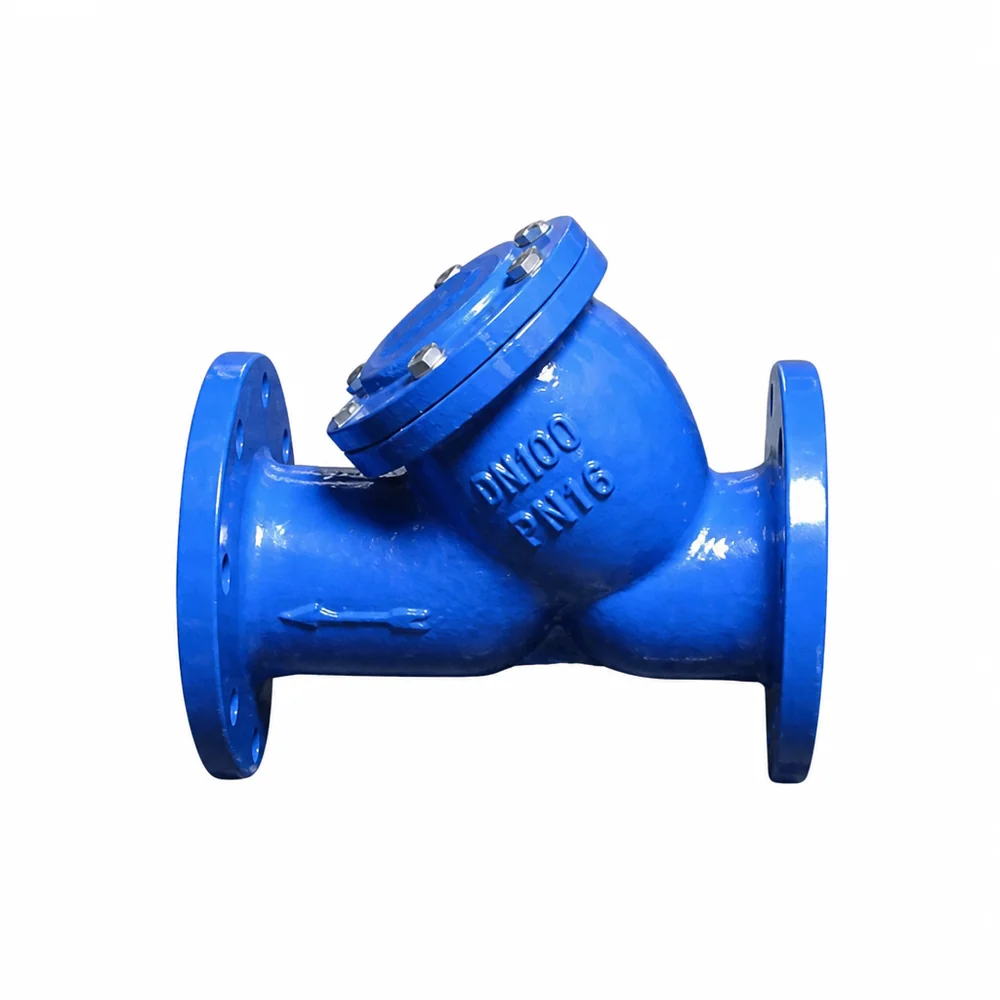
SGL41H Telescopic Y-Strainer
DN50 - DN600, SS304/316 screen, expansion joint built in
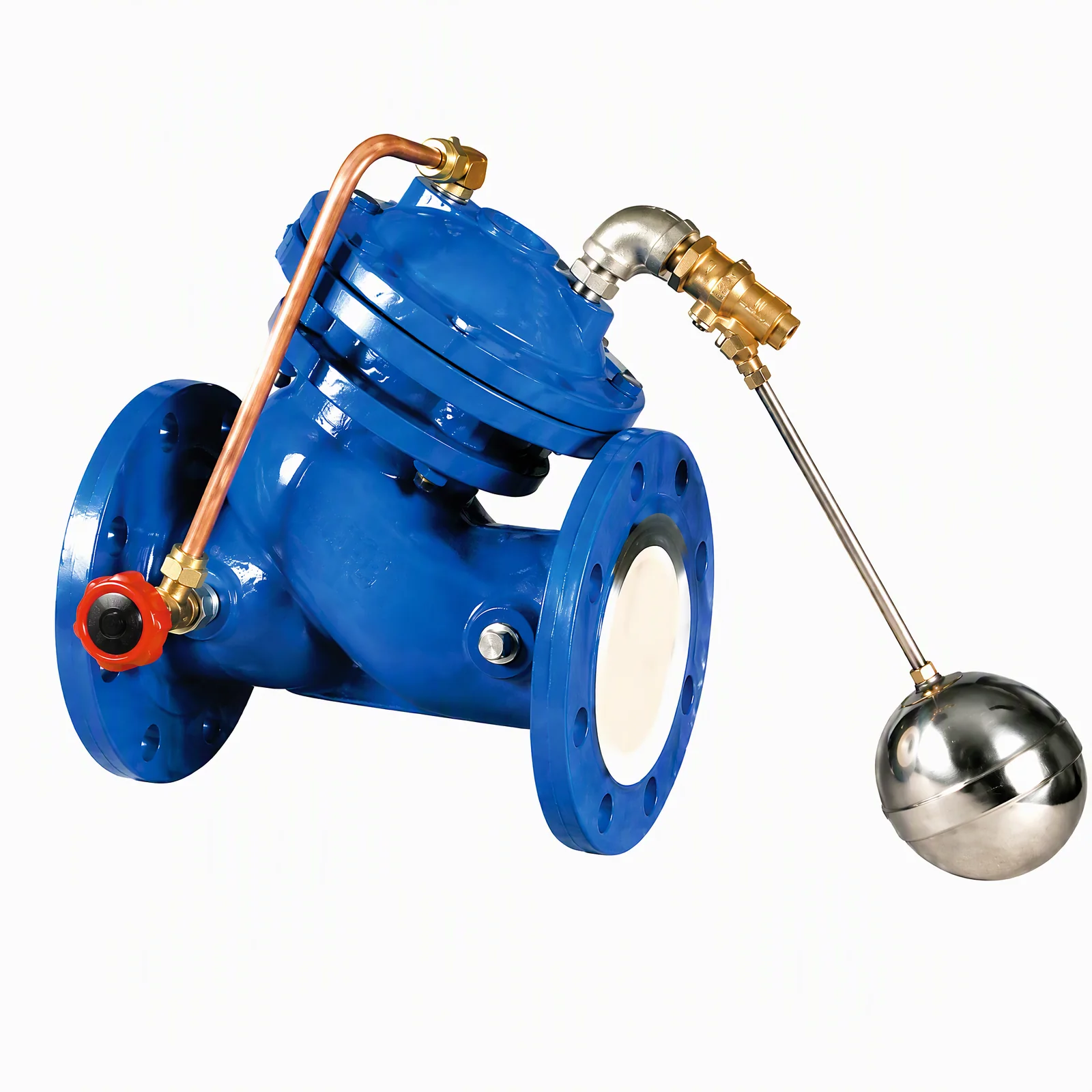
F745X Water Level Control Valve
DN50 - DN400, 1.0/1.6 MPa, brass float pilot
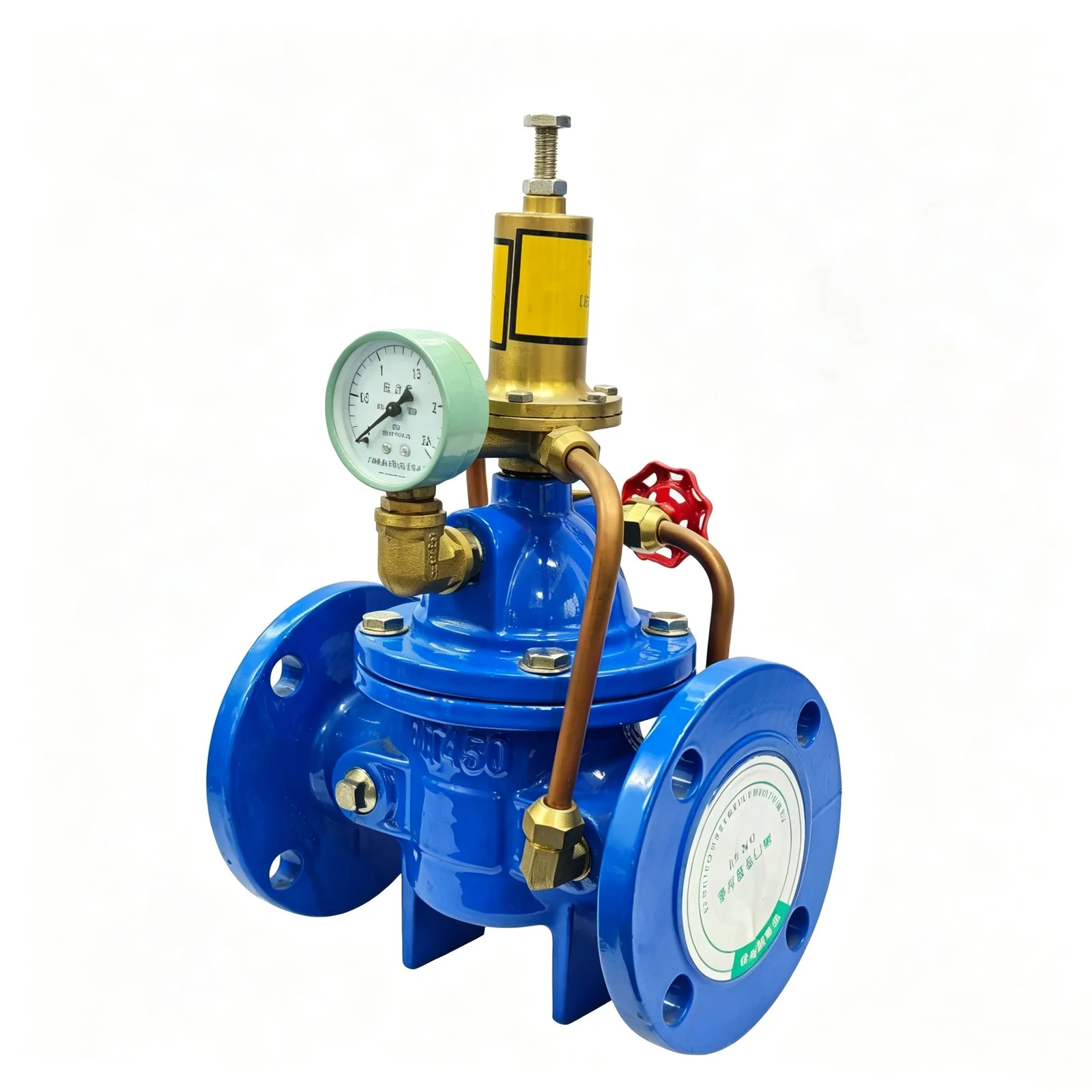
500X Pressure Reducing Valve
DN20 - DN600, set 0.1 - 1.6 MPa, pilot protected
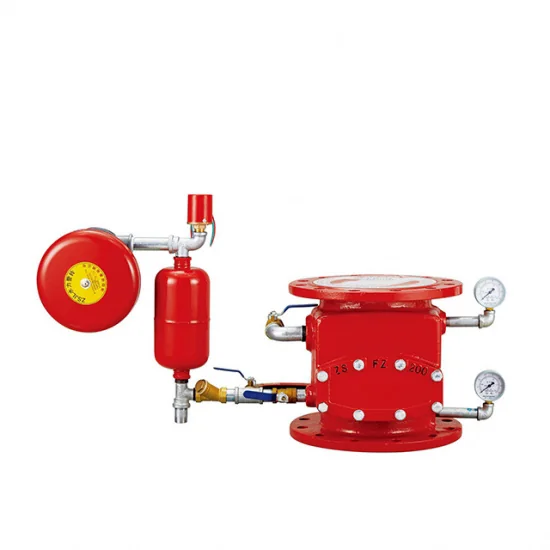
ZSFZ Wet Alarm Check Valve
DN100 - DN200 PN16 with retard chamber and gong
1. What the Strainer Actually Protects
Buyers often treat a strainer as a formality - a DN that matches the pipe, ordered with the valve it sits in front of. That is the decision that later shows up as a warranty claim. The strainer does not protect the pipe. It protects whatever cannot pass an object without leaking, jamming or misreading, and on a water control scope that list is short and specific.
Pilot-operated control valves. A F745X hydraulic water level control valve is a DN50 - DN400 diaphragm main valve steered by a solid brass float pilot, a needle valve and copper or stainless pilot tubing. The main valve will tolerate grit; the needle will not. A partly lifted needle passes water continuously, so the tank never reaches shut-off level and the overflow runs. The same logic applies to the 500X pressure reducing valve (DN20 - DN600, adjustable 0.1 - 1.6 MPa), where a fouled pilot senses the wrong downstream pressure and the zone it feeds drifts off set. See the pressure reducing valve guide for how that sensing loop is arranged.
Alarm and deluge trims. The ZSFZ wet alarm check valve reports flow through a retard chamber, pressure switch and water-motor gong, with galvanized or brass fittings between them. The ZSFM deluge alarm valve holds on diaphragm pressure-chamber balance and takes a DC24V / 0.5A solenoid pilot plus stainless or brass trims. Both alarm on small passages. A blocked alarm passage does not stop the system discharging - it stops anyone being told about it, which is the failure that matters at an audit.
Metering and instrumentation. A flow meter has nothing in the bore to foul, but grit scoring electrodes or lining changes its calibration permanently. Gauge siphons, sample points and sampler loops are all smaller than the pipe they hang off. Where the project also runs a 100X-16P stainless float valve on a hygienic tank, the stainless body resists corrosion but the pilot circuit is still the narrowest thing in the system.
2. Y, T and Basket Strainers Compared
Three body geometries cover nearly every water and fire protection duty. They differ in screen area, in how debris is removed, and above all in whether a maintenance technician can get the screen out without cutting pipe or draining a chamber.
| What to check | Y-Strainer | T / Basket Strainer | Telescopic Y (SGL41H) |
|---|---|---|---|
| Screen orientation | Angled bowl off the run, pointing downstream | Basket across the flow, lid above or beside | Angled bowl, sleeve retracts for withdrawal |
| Debris capacity | Moderate for its size; needs more frequent cleaning | Highest screen area per DN, longest run between cleans | Same as a Y; the gain is access, not capacity |
| Cleaning access | Bowl plug or bonnet bolts; needs clearance below the pipe | Needs headroom above the line to lift the basket | Screen pulled out along the bowl once the sleeve retracts |
| Footprint in the trench | Compact; bowl must not foul the trench wall | Largest; plan the chamber around it | Longer body than a plain Y by the sleeve travel |
| Size range on this catalogue | DN50 - DN600 at 1.0 / 1.6 MPa | Sourced to project specification on request | DN50 - DN600, 1.0 / 1.6 MPa, test 1.5 / 2.4 / 3.75 MPa |
| Where it belongs | Control valve inlets, pump suctions, meter sets | Large mains, high solids, long inspection intervals | Buried chambers, tight valve pits, serviceable lines |
The mistake to avoid is choosing the Y because it is cheaper and then specifying it where no one can remove the screen. A strainer that cannot be cleaned is decorative. On horizontal runs in a valve chamber, the integrated expansion joint of the SGL41H is what turns a two-hour job with a cutting torch into a ten-minute job with a spanner - the same maintenance logic that puts a telescopic resilient seat gate valve in a buried isolation pit.
3. Screen Mesh: Matching Openings to Downstream Equipment
Mesh is the one number buyers change without asking the factory, usually to "be safe". Finer cloth is not safer; it is a maintenance liability that shows up after handover. The screen opening must be clearly smaller than the smallest passage it protects, and clearly large enough not to choke the design flow between planned cleans.
The SGL41H is offered with 18-30 mesh cloth for water and 40-100 mesh for steam, in stainless steel 304 or 316. Water duty on a fire main, a tank fill or a pump suction belongs in the 18-30 band. Steam and other low-viscosity services justify finer cloth because the passages behind them are smaller and the condensate is cleaner.
| Typical | Approx. opening | Typical duty | Cleaning burden |
|---|---|---|---|
| 10 - 16 mesh | 1.2 - 1.6 mm | Raw water, river or pond intake, pump protection only | Low resistance, frequent large-debris removal |
| 18 - 30 mesh | 0.5 - 0.9 mm | Standard water range for hydraulic control valves, alarm valve inlets, meter sets | Balanced - the default for mains and tank fills |
| 40 - 60 mesh | 0.25 - 0.4 mm | Fine pilot circuits, closed-loop HVAC water, sensitive instrumentation | Rising - shortens the interval between cleans |
| 80 - 100 mesh | about 0.15 mm | Steam and gas service, spray nozzles, very small bores | High - needs differential pressure monitoring |
Two practical rules follow from that table. First, confirm the material: stainless 304 is the default, and 316 is the choice for coastal, brackish or chlorinated water, where a carbon steel or low-grade mesh will corrode through and deliver its own debris downstream. Body material is a separate decision from screen material - see valve body material selection for the ductile iron versus stainless trade-off.
Second, write the mesh number and the cloth standard on the purchase order. "With strainer" is not a specification; it is how a project ends up with a coarse perforated plate where a woven screen was intended. Because mesh designations vary with wire diameter, ask for the screen drawing with the nominal opening and open area stated, and treat any generic conversion table - including the one above - as a sanity check rather than a source.
4. Sizing: Line Diameter, Open Area and Pressure Drop
Strainers are quoted by nominal size, which tempts everyone to order the pipe diameter. Check three things before accepting it.
Open area, not nominal size. The screen, not the body, sets the resistance. A DN150 Y-strainer whose bowl is half the run diameter can present less free area than the DN100 valve beside it. Ask the factory for the screen's open area in cm2 for the size proposed, and compare it with the pipe bore. This is the single most useful number in a strainer datasheet and the one least likely to be volunteered.
Flow and the resulting loss. Give the design flow in m3/h, not just the DN. Take a pressure-drop-versus-flow curve for the actual size and mesh, and check the loss at peak flow as well as at average. Losses rise roughly with the square of velocity, so a duty that doubles at churn-test or flush conditions can quadruple the drop across a clean screen - and far more once it is loaded. Where the specification names a test regime, match it to the API 598 testing guide language so the reported figures mean the same thing at both ends.
What happens as it fouls. A blinded screen becomes the control orifice of the line. Downstream symptoms are unglamorous and easily misdiagnosed: a refill that takes twice as long as designed, a reducing valve whose zone sags when another branch opens, a pump that cavitates on a hot day. Before blaming the valve, measure. Two gauge tappings across the strainer cost almost nothing and convert guesswork into a reading; the alternative is a flow meter in the line, which also gives commissioning a number and can report over 4-20 mA or RS485 Modbus to the building system.
Size range on this catalogue is DN50 - DN600 at 1.0 or 1.6 MPa, with a working temperature up to 80°C and ductile iron QT450-10 bodies under epoxy coating. Where a project needs a higher rating, ask before assuming - pressure class, flange drilling and test pressure must all move together, and the drilling standard (ANSI, EN 1092, JIS or GB) has to match the pipeline. The flange standard comparison covers why DN and PN alone are not a complete connection specification.
5. Telescopic vs Standard Strainer Bodies
The SGL41H combines a Y-strainer and a telescopic expansion joint in one body, with a ductile iron filter body, a carbon steel or ductile iron expansion sleeve, stainless 304/316 screen, NBR or graphite stem seals and medium carbon steel telescopic bolts. Its catalogue purpose is explicit: protecting hydraulic water control valves and precision machinery from clogging, with the sleeve fitted so the strainer can be removed without cutting the line.
That combination earns its price difference in three situations, and wastes money in all others.
- Flush-mounted or buried chambers. If the bowl sits below floor level or against a trench wall, a standard strainer has nowhere to go when the screen comes out. The retracting sleeve solves that without an extra union or a spool piece.
- Serviceable control valve skids. A tank fill skid with an F745X, isolation gates and a strainer is cleaned on a schedule. Telescopic strainers plus Z41X isolation gate valves (DN50 - DN700, PN10/PN16, fully encapsulated EPDM wedge) mean the whole set can be opened without moving pipework.
- New build with unknown future access. Whoever maintains the plant in year eight did not design it. Buy the withdrawal clearance now.
Where the strainer sits in an open plant room with a drain tap below the bowl and bolt clearance in front of it, a standard Y body is the honest choice and the saving is real. Note that the telescopic principle is not a strainer exclusive - the same idea carries a gate valve in the telescopic resilient seat gate valve (DN50 - DN600, 1.0/1.6 MPa, about 25 mm of expansion compensation), so a municipal isolation-and-screening package can be kept consistent across both roles.
6. Installation: Orientation, Flow Direction and Access
Most strainer faults reported as product defects are installation faults. Four rules prevent the majority of them.
- Follow the arrow, on horizontal pipe, bowl pointing down or down-forward. The cast body carries a flow direction; the bowl is also the debris pocket. A Y-strainer installed with the bowl angled upward dumps its load back into the line the moment flow reverses or stops, and it cannot be drained before the bonnet is opened.
- Do not hang a heavy bowl in a trench wall. At DN200 and above, a full stainless screen in a ductile iron body is heavy, and the flange joint takes the bending load. Provide a support or change the geometry before the pipe is closed.
- Leave the space to clean it. Confirm the bolt swing arc, the bonnet removal distance and, on a telescopic unit, the full sleeve travel. Also confirm the drain: a plug or drain valve at the low point lets a technician flush the bowl into a bucket instead of onto the floor.
- Flush before the pilot circuit is connected. On any hydraulic control valve installation, construction grit is the leading cause of early pilot failure. Flush the main, pull and clean the screen, then connect the pilot tubing and needle valves. Commissioning sequence for the valve itself is set out in the water level control valve guide.
Placement relative to other equipment follows the same logic as the rest of the pump room: a strainer belongs where the sensitive item is, upstream of it, and usually downstream of any open tank or well where the debris originates. On pump suctions and tank penetrations, screening is not the only protection - a suction vortex preventer (stainless 304/316, DN50 - DN1000, built to EN 12845 and GB 50974-2014) keeps air out of the pump so the strainer is not asked to solve an aeration problem. The pump room arrangement as a whole is covered in the fire pump room valve guide.
One more arrangement decision: a bypass line with its own isolation valve lets a blinded strainer be cleaned while the system stays in service. On a fire main that is not a convenience item - if the only path to the screen requires draining the protected volume, the screen will not get cleaned on schedule.
7. Maintenance, Cleaning Intervals and Records
There is no universal cleaning interval, because the interval depends on what is in the water. Set it from the source, then adjust from evidence.
| Water source | Fouling driver | Practical starting point |
|---|---|---|
| Treated municipal main | Pipe scale, install debris, occasional grit from mains work | Inspect after commissioning, then annually; always after any main break or new connection |
| Groundwater / borehole | Sand, silt, iron or manganese precipitation | Quarterly in year one, then set from the measured differential |
| Surface or reservoir intake | Organic matter, biofilm, seasonal algae | Monthly through the growth season; consider a coarser first stage upstream |
| Fire main, static / rarely flowed | Corrosion products from the mains themselves, stirred up at test | Inspect after every flow or churn test, and at the site ITM visit |
Make the task doable by whoever holds the permit to work. That means the mesh number, the bonnet bolt size, the gasket set reference and the sleeve travel recorded once, on a one-page method statement filed with the strainer datasheet. Order spares against the same record: one stainless screen and a set of bowl gaskets per size will serve most plants for years, and both are far cheaper bought with the original order than during a shutdown. Body and coating condition matters as much as the screen - the maintenance and material choices are discussed in the valve body material guide.
On systems where the strainer protects an alarm function, tie the inspection to the same visit that tests the alarm. The ZSFC dry alarm valve and its delay chamber, gong and gauges, and the wet system equivalents, are checked against trips and false alarms; a pilot or trim passage half-blinded shows up in that test long before anyone opens the strainer.
8. RFQ Checklist for Pipeline Strainers
Strainers are quoted thinly by default. Put these lines in the enquiry and the offers become comparable, including with the valves they are meant to protect.
- Service and medium. Water or oil products, potable or not, temperature up to 80°C, and whether the line ever runs dry.
- Size and class. DN plus nominal pressure - DN50 - DN600 at 1.0 or 1.6 MPa on this body - and the test pressure you expect on the datasheet (1.5 / 2.4 / 3.75 MPa for these ratings).
- Body and coating. Ductile iron QT450-10 with epoxy coating as standard; name the coating system and thickness if the line is buried or the water is aggressive.
- Screen material and mesh. SS304 or SS316, plus the mesh number (18-30 for water, 40-100 for steam) and a request for the screen drawing with nominal opening and open area.
- Body type. Standard Y or telescopic, decided by access - and if telescopic, the sleeve travel and the bolt material.
- End connection. Flanged with the drilling standard stated (ANSI, EN 1092, JIS or GB) so it matches the pipeline, per the flange standard guide.
- Accessories. Drain plug or drain valve at the low point, bonnet gaskets, a spare screen, and a differential pressure provision across the screen if the duty is critical.
- Documentation. Shell and seat or body test records for the delivered size (see the API 598 test guide), material certificates for body and screen, and the pressure-drop curve at your flow.
- Package it with what it protects. Buyers most often save money by ordering the strainer on the same line item as the control valve - the 500X, GKZF-1 solenoid control gate valve or alarm valve group - and by running the 8-point supplier verification checklist before award.
Related buying scopes on this site: the backflow prevention guide for what belongs upstream of a tank connection, the water hammer protection guide for closing speed and surge, and the commercial sprinkler BOM guide for assembling the whole valve and alarm package on one purchase order.
Frequently Asked Questions
What mesh size should I order for a water line? +
For water, order the coarse screen that still protects the weakest device downstream. The SGL41H is supplied with 18-30 mesh cloth for water duty and 40-100 mesh for steam, in stainless steel 304 or 316. A fire water or potable main with a hydraulic control valve behind it sits comfortably in that 18-30 band; go finer only when a specific component demands it, because every step finer multiplies cleaning frequency. As a rough guide, standard woven cloth opens about 0.8-0.9 mm at 20 mesh, 0.5-0.6 mm at 30 mesh, 0.4 mm at 40 mesh and around 0.15 mm at 100 mesh - the exact figure depends on wire diameter, so take the number from the vendor screen drawing rather than from a generic table.
Do I really need a strainer upstream of a hydraulic control valve? +
In practice yes, and most warranty disputes trace back to omitting it. A pilot-operated valve such as the F745X level control valve, the 500X pressure reducing valve or the 100X-16P float valve is a large diaphragm main valve controlled by very small passages: a float pilot, a needle valve and copper or stainless pilot tubing. Grit that a main-line gate valve would pass without complaint will hold a pilot needle off its seat, and the symptom appears weeks later as a tank that overflows or a zone whose pressure drifts. The strainer is the cheapest component in that circuit and the one that prevents the most expensive call-out.
Y strainer or T strainer for a large fire water main? +
Choose on access and debris load, not on price. A Y strainer sits in line with its screen bowl angled downstream, drains and cleans easily, and suits horizontal runs where the bowl can hang clear of the floor - the SGL41H covers DN50 - DN600 at 1.0 or 1.6 MPa. A T (basket) strainer holds a larger screen area in the same nominal size, so it fouls more slowly at high flow, but it needs vertical clearance above the line to lift the screen basket out. On DN200 and above, where a Y bowl becomes heavy and its screen area is small relative to the pipe, a basket type is often the better hydraulic choice if the chamber allows the lift.
Does a strainer reduce flow, and how much? +
It adds resistance, and the amount changes as the screen loads. A clean screen with adequate open area produces a small, roughly square-law loss with flow; a partly blinded screen produces a large and unpredictable loss and becomes the control orifice in your line. That is why the honest specification asks for two numbers - the clean open area of the screen and a pressure-drop-versus-flow curve for the size proposed - rather than accepting a DN that simply matches the pipe. If the duty matters, verify it in service: an electromagnetic flow meter (DN10 - DN2000, 0.5% or 1.0% accuracy class, pulse or 4-20 mA output, RS485 Modbus) turns a suspected blinded screen into a measured fact.
Can the screen be cleaned, or is it a consumable? +
The screen is cleanable; the gasket kit is the consumable. The SGL41H screen is stainless steel 304/316 and can be brushed and rinsed repeatedly, while the body is ductile iron QT450-10 with epoxy coating and the stem seals are NBR or graphite. Order the bowl gaskets and a spare screen with the valve, not after the first shutdown. Where the line layout makes the bowl hard to reach, the telescopic body is the practical fix: the built-in expansion sleeve retracts so the screen can be withdrawn without cutting pipe, the same idea used on the telescopic resilient seat gate valve.
Is a strainer actually required by the standard on my project? +
Treat it as a specification question, not a catalogue question. System designers commonly call for strainers on pilot, priming and deluge-trim circuits precisely because those are the passages that cannot swallow debris, and the requirement sits in the standard named in your contract documents rather than in the valve datasheet. Read the piping and instrumentation drawing, check whether a strainer is shown at each control valve, and if the specification is silent, raise it in the bid query and get the answer in writing. Our NFPA standards guide and CE / EN 12845 compliance guide explain how to trace a device back to the standard that governs it.
Need Strainers for Control Valves or Fire Water Mains?
Send us DN, pressure class, medium, mesh requirement and the equipment the strainer protects - our engineers confirm the screen and body arrangement and quote within 12 hours.